 murmur
Aoi Matsuri (Hollyhock Festival)
Kyoto City · Kyoto Imperial Palace to Shimogamo and Kamigamo Shrines
Dates and details can change. Always check the official website before you go.
Kyoto City Tourism Association (Kyoto Travel) · Last checked: Oct 10, 2026
Dates
Dates confirmed with official sources
- 2026
- Fri, May 15, 2026 (Ended) Procession leaves the Imperial Palace at 10:30, reaches Shimogamo Shrine at 11:40 (departs 14:20) and Kamigamo Shrine at 15:30 (times for the head of the procession)
- 2027
- Dates have not been announced yet. Please check the official website.
- Usual timing
- Usually mid May
- How the date is set
- Every year on May 15 Postponed to the next day if it rains (decided around 6 p.m. the day before)
- Venue
- Kyoto Imperial Palace to Shimogamo and Kamigamo Shrines
- City
- Kyoto City, Kyoto

About
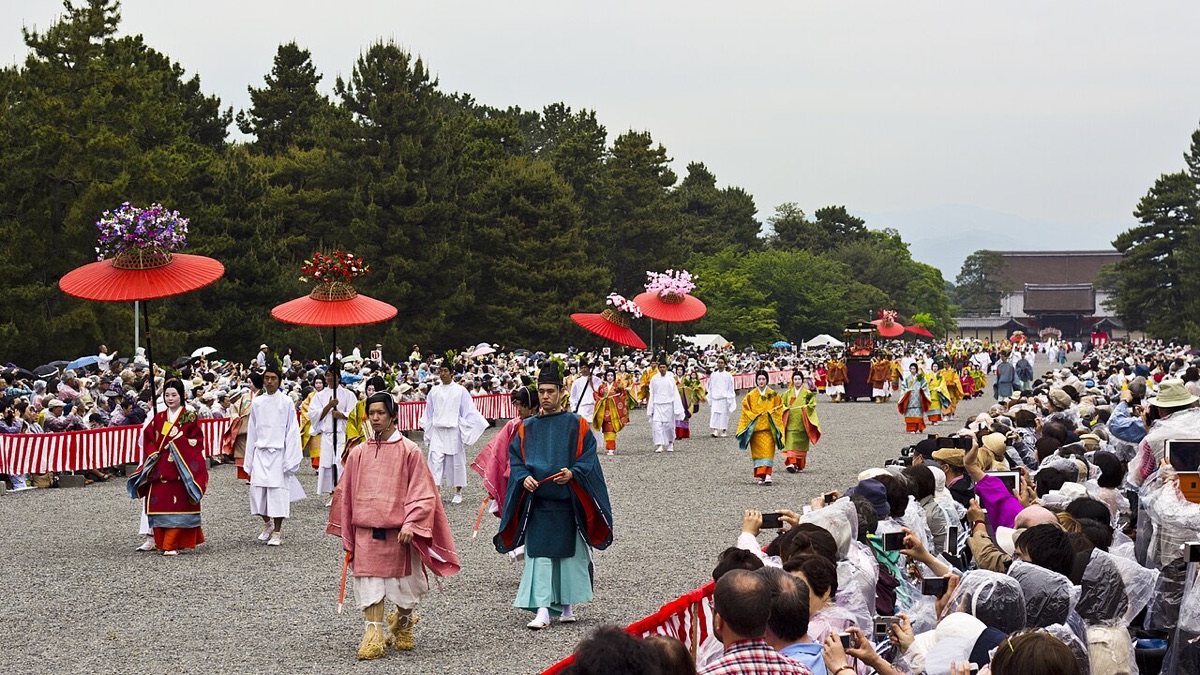
One of Kyoto's three great festivals, the Aoi Matsuri is the annual festival of Kamigamo and Shimogamo Shrines, said to have begun in the 6th century under Emperor Kinmei after a famine, and mentioned in The Tale of Genji. The highlight is the Roto no Gi procession on May 15: more than 500 people in Heian-period court dress, along with 36 horses, 4 oxen, ox-drawn carriages and flower-decked parasols, walk about 8 km from the Imperial Palace to Shimogamo Shrine and on to Kamigamo Shrine. The festival takes its name from the hollyhock (aoi) leaves that decorate the carriages and costumes. Preliminary rites such as horseback archery are held in early May, and paid viewing seats are available at the Kyoto Imperial Park and along the Shimogamo Shrine approach.
Sources
- OfficialKyoto City Tourism Association (Kyoto Travel) ja.kyoto.travel
- OfficialKyoto City Tourism Association (Kyoto Travel) ja.kyoto.travel
Last checked: Oct 10, 2026. Event information is based on official announcements, but changes may not always be reflected here. Please check each official website for accurate details.
Other events this month
On the day, see what locals are murmuring on the murmur map
murmur is an app that shows short, anonymous posts on a map, right where they were written. On festival day, open the map around the venue and see what people nearby are saying.