 murmur
Fukagawa Hachiman Matsuri (Tomioka Hachimangu Annual Festival)
Koto City · Tomioka Hachimangu Shrine and surrounding streets (1-20-3 Tomioka, Koto)
Dates and details can change. Always check the official website before you go.
Tomioka Hachimangu Shrine · Last checked: Oct 10, 2026
Dates
Dates confirmed with official sources
- 2026
- Aug 12–16, 2026 (Ended) Joint procession of neighborhood mikoshi on August 16
- 2027
- Dates have not been announced yet. Please check the official website.
- Usual timing
- Usually mid August
- How the date is set
- Changes from year to year Held around August 15; the grand festival with the joint procession of portable shrines takes place every three years
- Venue
- Tomioka Hachimangu Shrine and surrounding streets (1-20-3 Tomioka, Koto)
- City
- Koto City, Tokyo

About
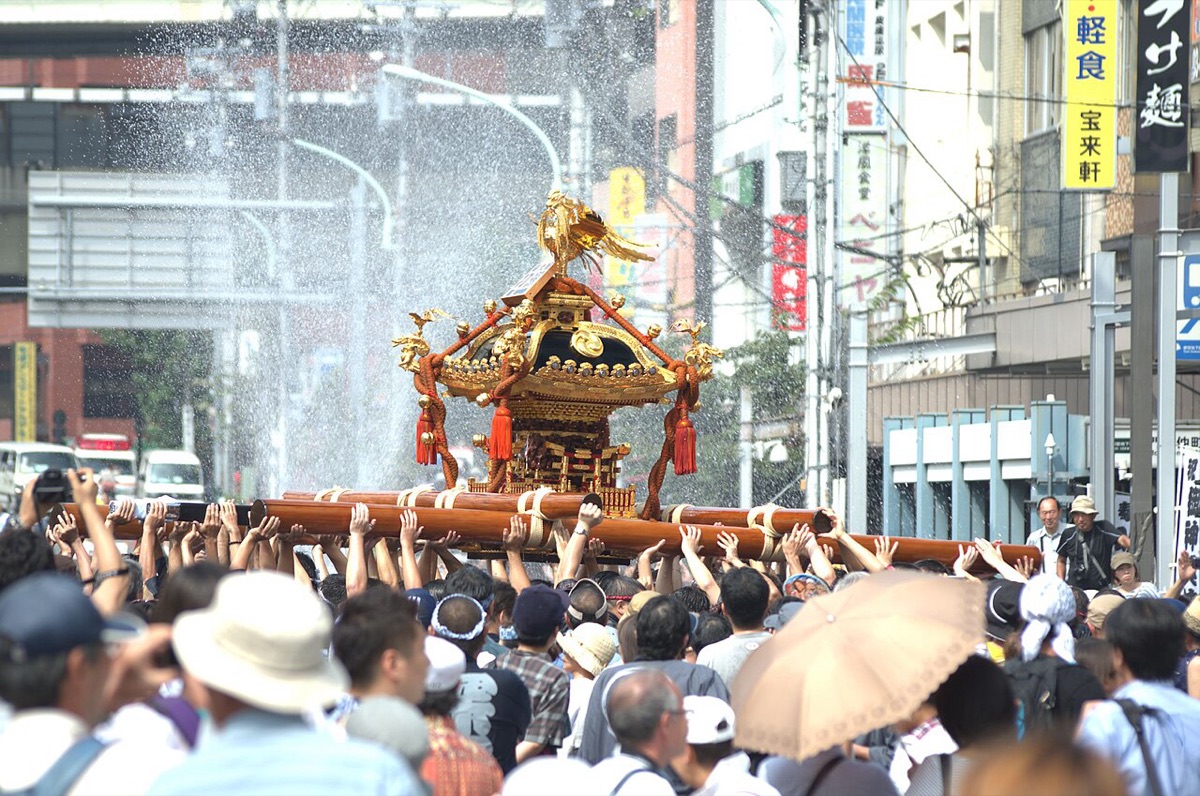
Known as the Fukagawa Hachiman Matsuri, the annual festival of Tomioka Hachimangu takes place around August 15 each year and is ranked with the Sanno Festival of Hie Shrine and the Kanda Festival as one of Edo's three great festivals. It is also called the "water-splashing festival": as bearers shout the traditional "wasshoi," onlookers douse them with purifying water, and the crowd and the bearers celebrate as one. In the main festival, held once every three years, the shrine's sacred palanquin goes out and the neighborhood mikoshi parade together in a joint procession, a sight unique to this festival. The shrine's mikoshi burned in the Great Kanto Earthquake, but a golden great mikoshi was made in 1991, and a second shrine mikoshi joined it in 1997.
Sources
- OfficialTomioka Hachimangu Shrine www.tomiokahachimangu.or.jp
- OfficialTokyo Convention & Visitors Bureau (GO TOKYO) www.gotokyo.org
Last checked: Oct 10, 2026. Event information is based on official announcements, but changes may not always be reflected here. Please check each official website for accurate details.
Other events this month
On the day, see what locals are murmuring on the murmur map
murmur is an app that shows short, anonymous posts on a map, right where they were written. On festival day, open the map around the venue and see what people nearby are saying.